Mainland vs Free Zone: Choosing the Right UAE Structure
The first big decision for any UAE business. We break down market access, ownership, cost and tax to help you choose.
Read more
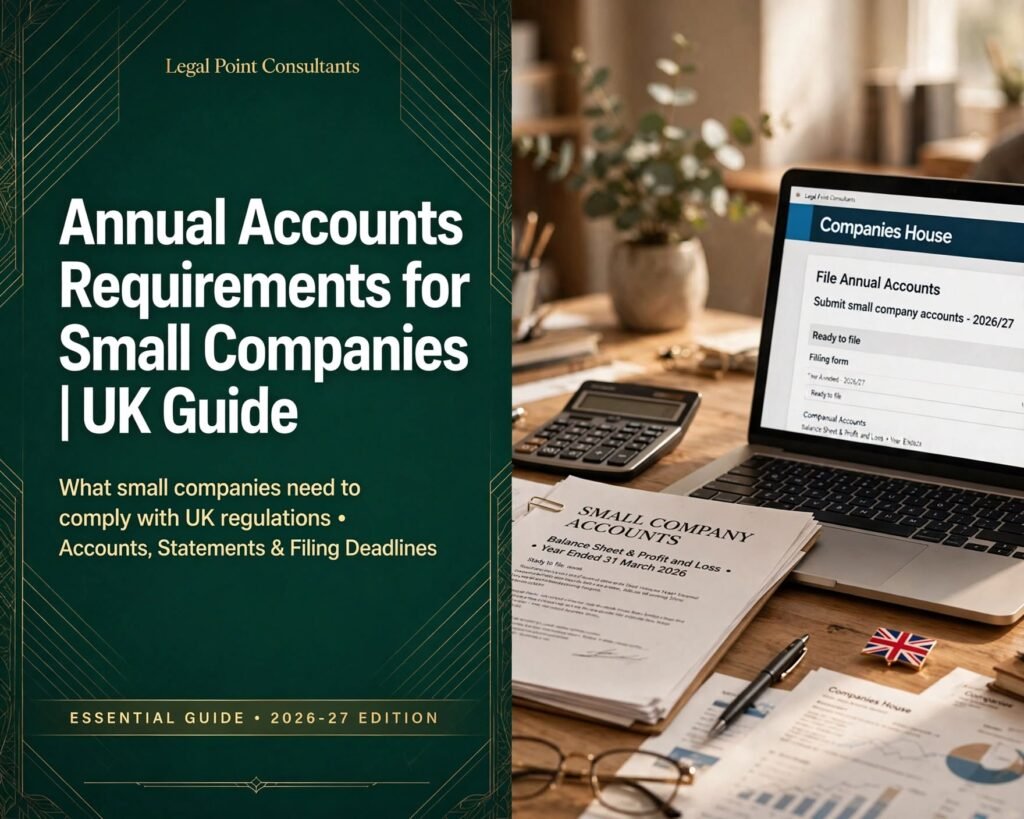
Running a small UK limited company comes with ongoing reporting responsibilities. One of the most important is preparing and filing annual accounts with Companies House. Understanding the UK annual accounts requirements for small companies is particularly important for directors because small companies can benefit from simplified reporting and audit exemptions, but they are still legally required to keep appropriate accounting records and file the accounts that apply to their company.
For accounting periods beginning on or after 6 April 2025, a company generally qualifies as small if it meets at least two of these three conditions: annual turnover of no more than £15 million, balance sheet total of no more than £7.5 million, and an average of no more than 50 employees.
However, being classified as a small company does not mean that you can ignore annual accounts, Corporation Tax or other Companies House filings.
This guide explains what small UK companies need to know about annual accounts in 2026, including eligibility, filing deadlines, accounting requirements, audit exemptions, dormant companies, micro-entities and upcoming Companies House changes.
Annual accounts, also called statutory accounts, are financial statements prepared from a company’s accounting records at the end of its financial year.
They provide information about the company’s financial position and performance.
Depending on the company’s size and applicable reporting regime, statutory accounts may include:
The exact information that must be prepared and filed depends on the company’s size, status and applicable accounting framework.
Companies House confirms that statutory accounts must comply with the applicable UK accounting requirements or International Financial Reporting Standards.
For a small company, the benefit is that the law allows certain reporting simplifications compared with larger companies.
Annual accounts are not optional simply because a company is small.
UK registered companies generally have to prepare and file annual accounts with Companies House, including companies that are dormant or have not traded.
This means that a small private limited company may still need to file accounts even if:
The exact filing requirements can differ for dormant companies and companies benefiting from specific exemptions, but directors should not assume that “no trading” automatically means “no filing.”
The current thresholds are particularly important because they determine whether a company can use the small companies regime.
For accounting periods beginning on or after 6 April 2025, a company generally qualifies as small if it meets at least two of the following three conditions:
| Test | Small Company Threshold |
|---|---|
| Annual turnover | £15 million or less |
| Balance sheet total | £7.5 million or less |
| Average number of employees | 50 or fewer |
You do not have to meet all three conditions.
For example, if a company has:
it meets two of the three conditions and can generally qualify as small.
The rules for determining qualification in subsequent financial years can also involve whether the company meets the conditions over consecutive years, so directors should not rely on a single year’s figures without checking the applicable rules.
A small company should not automatically be treated as a micro-entity.
A micro-entity is a smaller category with its own simplified reporting provisions.
For accounting periods beginning on or after 6 April 2025, a company generally qualifies as a micro-entity if it meets at least two of these conditions:
This distinction matters because micro-entities can use an even simpler reporting framework.
| Category | Turnover | Balance Sheet | Employees |
|---|---|---|---|
| Micro-entity | ≤ £1m | ≤ £500k | ≤ 10 |
| Small company | ≤ £15m | ≤ £7.5m | ≤ 50 |
These thresholds are not the only consideration. Group structures, company type and other legal circumstances can affect eligibility.
The contents of statutory accounts depend on the applicable reporting regime.
In general, statutory accounts can include:
The balance sheet provides a snapshot of the company’s financial position at the end of the financial year.
It can show:
The balance sheet must include the name of a director and be signed by a director.
The profit and loss account shows the company’s financial performance during the accounting period.
It generally covers:
The filing requirements for the profit and loss account depend on the company’s applicable size and reporting regime.
Notes provide additional information needed to understand the financial statements.
Depending on the company, they may explain accounting policies, financial information and other relevant matters.
A director’s report may be required depending on the company’s status.
However, micro-entities benefit from an exemption from preparing a director’s report under the applicable simplified regime.
An auditor’s report is required where the company is subject to audit.
Many small private companies can qualify for audit exemption, but this should be checked rather than assumed.
Not necessarily.
A qualifying small private company can generally claim an audit exemption if it meets the relevant conditions.
For financial years beginning on or after 6 April 2025, the small-company audit exemption thresholds are:
The company generally needs to satisfy at least two of these conditions.
However, audit exemption is not available in every situation.
For example, certain types of companies are required to have an audit regardless of their size.
An audit may also be required if:
Companies House guidance states that shareholders holding at least 10% of shares can request an audit in qualifying circumstances.
Therefore, directors should confirm eligibility before claiming audit exemption.
Abridged accounts allow eligible small companies to submit less information to Companies House.
A small company may be able to send abridged accounts where the relevant conditions are met and all company members agree.
Companies House explains that abridged accounts must contain a simpler balance sheet with notes, while certain other components may be included depending on the company’s choice and circumstances.
One important advantage is that less financial information may be publicly available through the Companies House filing.
However, abridged accounts do not mean that the company’s internal accounting records can be incomplete.
The company still needs proper accounting records to prepare its statutory accounts and meet tax obligations.
The standard deadline for a private company to file annual accounts with Companies House is generally 9 months after the end of its financial year.
For example, if the financial year ends on:
31 December 2026
the normal Companies House filing deadline would be:
30 September 2027
GOV.UK confirms that a private company’s first accounts generally have a different deadline: they must usually be filed within 21 months of the date the company was registered. Subsequent annual accounts generally have a 9-month filing period following the financial year-end.
Directors should check their company’s specific filing date rather than calculating it incorrectly.
This is one of the most important distinctions for small company directors.
Companies House annual accounts and the Corporation Tax return are separate filings.
A company may have to submit information to both:
Annual accounts report the company’s financial position for statutory company reporting purposes.
The Company Tax Return reports the company’s taxable position for Corporation Tax purposes.
GOV.UK currently states that a private company generally has to:
These deadlines are not interchangeable.
This is why a business owner should not assume that filing accounts with Companies House automatically completes the company’s HMRC obligations.
For businesses that need help coordinating company formation, accounting, annual accounts and HMRC compliance, Legal Point Consultants’ UK company services provide support across Companies House and HMRC requirements.
Another common misunderstanding is confusing annual accounts with the confirmation statement.
They are different filings.
Annual accounts provide financial information about the company.
They generally cover:
The confirmation statement is used to confirm that important company information held by Companies House is accurate and up to date.
This can include information relating to:
Legal Point Consultants specifically treats annual accounts and the confirmation statement as separate recurring Companies House obligations.
A company can therefore have accounts filed and still have a separate confirmation statement deadline.
Preparing annual accounts starts with maintaining accurate accounting records throughout the year.
A company should maintain records that allow its directors to understand its financial position and prepare appropriate accounts.
Depending on the business, records may include:
The exact accounting requirements depend on the business and its circumstances.
Good bookkeeping throughout the year can make the annual accounts process significantly easier.
This is particularly important for companies with overseas owners, multiple currencies or cross-border transactions.
The fact that the company’s directors or shareholders live outside the UK does not remove the company’s Companies House filing obligations.
For example, a Pakistani entrepreneur may establish a UK private limited company while continuing to live in Pakistan.
The company may still have UK obligations relating to:
Legal Point Consultants specifically offers remote UK company formation and ongoing compliance support for overseas founders.
This is particularly relevant for international founders who want to establish a UK company without managing every Companies House and HMRC requirement themselves.
Generally, yes.
A company does not automatically stop having Companies House filing obligations simply because it has stopped trading.
Companies House states that companies must file annual accounts even when they are dormant or not trading, although simplified rules can apply to qualifying dormant companies.
A dormant company may be able to file dormant accounts rather than normal trading-company accounts.
However, directors should also distinguish between:
Dormant for Companies House purposes
and
Dormant for Corporation Tax purposes.
These are not necessarily identical concepts.
If a company has been inactive, it is sensible to review its status with both Companies House and HMRC.
Late accounts can result in penalties.
Companies House operates penalties for late filing, so directors should establish the deadline well before the accounts are due.
Being classified as small does not remove the annual accounts requirement.
Instead, qualifying companies may benefit from simplified reporting.
Companies House accounts and the HMRC Corporation Tax Return are separate compliance requirements.
The confirmation statement is separate from annual accounts.
A company can still have filing requirements even if it made no profit.
A company should not simply call itself a “small company” because it has low turnover.
The applicable statutory thresholds and qualification rules should be checked.
Companies that form part of a group may need to consider group-level figures and specific rules when determining whether small-company exemptions apply.
Leaving bookkeeping and accounts preparation until the last minute increases the risk of errors, missing information and late filing.
Small-company directors should also be aware that Companies House is changing the way accounts are filed.
Companies House announced in June 2026 that significant accounts reforms will be introduced from 1 April 2028.
Among the announced changes:
This means that the way small companies submit information to Companies House is changing.
The reforms are designed to improve the quality, transparency and reliability of information held on the Companies House register.
Small-business owners should therefore avoid relying on older articles or outdated filing instructions when preparing future accounts.
A practical process can look like this:
Confirm the company’s accounting period and year-end date.
Check:
Make sure the balance sheet information is complete and accurate.
Check whether the company qualifies as:
Check whether the company qualifies for audit exemption.
Prepare accounts under the applicable reporting framework.
Make sure the company information held by Companies House is accurate.
Submit the appropriate accounts before the filing deadline.
Prepare and submit the Company’s Corporation Tax Return and deal with any Corporation Tax payment requirements.
Do not treat annual accounts as a one-time requirement.
They form part of the company’s recurring compliance cycle.
Small businesses often have limited finance teams.
A director may be responsible for:
Trying to manage all these responsibilities without an organised compliance process can lead to missed deadlines.
Legal Point Consultants provides UK businesses with accounting, annual accounts, Corporation Tax, confirmation statement and wider compliance support. Its UK service covers both Companies House and HMRC obligations, including support for overseas founders.
This can be particularly useful where a company has:
Before filing, directors should review the following:
Small UK companies generally need to prepare statutory annual accounts and file the appropriate accounts with Companies House. Companies that qualify as small may benefit from simplified reporting and audit exemptions.
For accounting periods beginning on or after 6 April 2025, a company generally qualifies as small if it meets at least two of these conditions: turnover of £15 million or less, balance sheet total of £7.5 million or less, and no more than 50 employees on average.
For most private companies, annual accounts are generally due at Companies House nine months after the end of the company’s financial year. First accounts usually have a 21-month deadline from incorporation.
Not necessarily. A qualifying small private company can generally claim audit exemption if it meets the relevant conditions, although certain companies and circumstances require an audit.
Eligible small companies may be able to file abridged accounts if the applicable requirements are met and all members agree.
Generally, yes. Dormant companies can benefit from simplified filing provisions, but being dormant does not normally remove the Companies House annual accounts requirement.
No. Annual accounts are filed with Companies House, while the Company Tax Return is filed with HMRC. They have different purposes and deadlines.
Yes. A company’s directors or shareholders being based outside the UK does not generally remove its UK company filing obligations.
Annual accounts provide financial information about the company. A confirmation statement confirms that key company information held on the Companies House register is current and accurate.
Yes. Companies House has announced reforms beginning from 1 April 2028, including changes affecting small companies and micro-entities and a move toward commercial software filing.
Understanding the UK annual accounts requirements for small companies is essential for every company director, including overseas founders running UK businesses remotely.
Being classified as a small company can provide valuable reporting simplifications and, where eligible, audit exemption. However, it does not remove the need to maintain proper accounting records or meet Companies House and HMRC obligations.
For accounting periods beginning on or after 6 April 2025, the current small-company thresholds are significantly higher than the previous thresholds, with the company generally needing to satisfy at least two of the £15 million turnover, £7.5 million balance-sheet and 50-employee tests.
Directors should also remember that annual accounts, Corporation Tax returns and confirmation statements are separate compliance obligations.
With further Companies House accounts reforms planned from April 2028, keeping your company’s accounting and filing processes organised is becoming even more important.
If you are forming a UK company, already operate a UK limited company, or manage a UK business from overseas, professional support can help you keep your accounts and statutory filings on schedule.
Legal Point Consultants provides UK company formation, accounting, annual accounts, Corporation Tax, confirmation statement and ongoing compliance support for UK businesses and overseas founders.
Need help with UK annual accounts or ongoing company compliance? Contact Legal Point Consultants for professional assistance with Companies House and HMRC requirements.
These should be inserted contextually within the article, not dumped together as a generic link list:
 Company Formation
The first big decision for any UAE business. We break down market access, ownership, cost and tax to help you choose.
Read more Company Formation
A clear, practical walkthrough of the key decisions and steps involved in registering a company in the United Arab Emirates.
Read more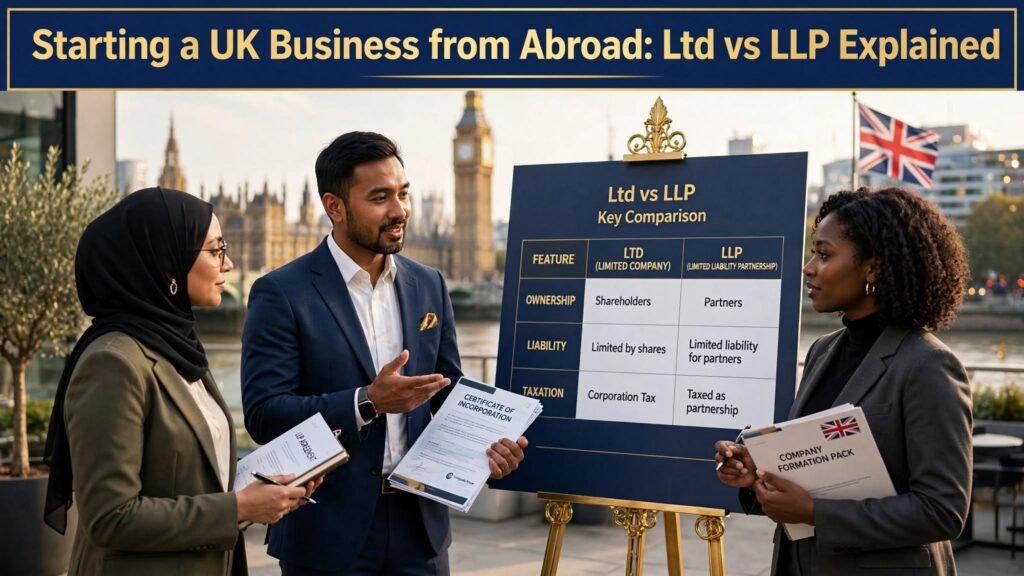 Company Formation
UK Ltd vs LLP for Non-Resident Founders: Which Business Structure Should You Choose? UK Ltd vs LLP for Non-Resident Founders is an important consideration…
Read more