Non-Resident with a UK Company? Avoid These 4 Costly Mistakes
Owning a UK company while living outside the United Kingdom can be an attractive option for international entrepreneurs, consultants, technology founders and online businesses.…
Read more

Non-resident foreign investors can establish and own a company in Saudi Arabia without necessarily being Saudi residents. However, the process depends on the business activity, foreign investment rules, company structure, registration, licensing, and sector-specific requirements. Understanding these requirements is essential before starting a Saudi company from abroad. Can a non-resident own a company in Saudi Arabia? Learn about foreign ownership, MISA registration, company formation, licensing and key requirements.
Saudi Arabia’s updated Investment Law recognizes both local and foreign investors and provides a legal framework for foreign investment in the Kingdom. The law defines a foreign investor as a natural or legal person who carries out investment and is not considered a local Saudi investor. It also recognizes investment through establishing, expanding, developing, managing, or partially or fully owning an investment project.
However, owning a Saudi company as a non-resident is not simply a matter of registering a company online. Foreign investors must comply with the applicable investment registration, commercial registration, licensing, corporate, tax, employment, and other regulatory requirements.
For international entrepreneurs and companies considering Saudi company formation, understanding these requirements before starting the process can help avoid unnecessary delays and compliance problems.
A non-resident foreign investor can potentially establish and own a company in Saudi Arabia, including through permitted forms of foreign investment.
Saudi Arabia’s investment framework provides for foreign investment while allowing the government to maintain restrictions on activities that are excluded or subject to special requirements. The updated Investment Law specifically states that an investor may engage in investment in sectors available for investment, subject to the law and relevant legislation.
This means the answer is yes, but subject to conditions.
The most important question is not simply whether the investor lives outside Saudi Arabia. The key issues include:
Being a resident of Saudi Arabia is not the same as being eligible to make a foreign investment.
The updated Investment Law distinguishes between local and foreign investors based on nationality/status under the law. A foreign investor can therefore fall within the Saudi investment framework without being a Saudi national.
For a non-resident entrepreneur, however, company ownership and the right to personally live and work in Saudi Arabia are separate legal issues.
Company ownership does not automatically mean that the owner has a Saudi residence permit or work authorization.
If the foreign owner wants to live in Saudi Arabia, work for the company, manage operations from inside the Kingdom, or sponsor employees, additional immigration and employment requirements may apply.
This distinction is important for anyone planning a Saudi company from outside the Kingdom.
Foreign ownership depends on the business activity and applicable regulations.
Saudi Arabia’s investment framework allows foreign investment, and the Ministry of Investment’s published materials recognize forms of investment that may be wholly owned by a foreign investor. The earlier implementing framework expressly provided for firms wholly owned by a foreign investor, subject to the applicable rules and permitted activities.
Under the current investment framework, however, foreign investors must check whether the intended business activity is available for foreign investment and whether any restrictions, approvals, or additional conditions apply.
Therefore, it is better to ask:
“Is my specific business activity open to foreign ownership?”
rather than assuming that every type of Saudi company can automatically be 100% foreign-owned.
The appropriate legal structure depends on the business model, ownership arrangement, activity, and regulatory requirements.
Common structures considered by investors may include:
An LLC can be suitable for many commercial activities and may be considered by foreign investors depending on the applicable requirements.
A joint stock structure may be appropriate for larger businesses or particular investment structures where the legal and regulatory requirements justify it.
An international company may consider establishing a branch in Saudi Arabia where the applicable rules and business circumstances permit it.
Saudi corporate regulations recognize different legal forms, and the appropriate structure should be selected according to the intended activity and regulatory requirements.
The choice should not be made solely on the basis of ownership percentage. Tax, governance, capital, licensing, banking, employment, liability, and compliance considerations can also affect the decision.
The Ministry of Investment of Saudi Arabia (MISA) plays an important role in the investment framework for foreign investors.
MISA’s published guidance states that a foreign investor must register with MISA before engaging in investment activities in the Kingdom. After receiving notification that registration has been completed, the investor can proceed with obtaining a commercial registration and the necessary licenses from other competent authorities.
This makes MISA registration an important consideration for a foreign entrepreneur planning to establish a Saudi business.
The exact requirements can depend on:
Although the exact procedure varies by business activity, a foreign investor generally needs to consider the following stages.
The first step is identifying exactly what the company will do.
For example:
Different activities can have different licensing and foreign-investment requirements.
Before spending money on incorporation, the proposed activity should be checked against the applicable Saudi investment rules.
Some activities may be open to foreign investors, while others may be restricted, excluded, or subject to additional conditions. The updated Investment Law expressly refers to a list of activities in which foreign investment is prohibited or restricted.
MISA states that foreign investors must register before engaging in investment activities in Saudi Arabia.
The investor should therefore determine the applicable registration route and prepare the required corporate and identification documents.
After satisfying the applicable investment requirements, the investor can proceed with the relevant company incorporation and commercial registration procedures.
The legal structure should be selected carefully because it can affect ownership, governance, liability and future expansion.
A commercial registration does not necessarily replace activity-specific licenses.
Depending on the business, approvals or licenses may be required from other Saudi authorities.
For example, regulated sectors may have additional requirements beyond the basic company registration process.
A Saudi company may have tax, Zakat, VAT, accounting, employment and other regulatory obligations depending on its structure and activities.
MISA’s tax-law guidance explains that a company may be considered resident in Saudi Arabia if it is formed under the Saudi Companies Law or if its central management is located in Saudi Arabia.
The actual tax position should therefore be assessed according to the company’s structure, ownership and activities.
A foreign-owned Saudi company may need a corporate bank account to conduct its business.
However, opening a business bank account is a separate compliance process from company formation.
The bank may request documents relating to:
The exact requirements can vary between banks and according to the company’s circumstances.
Therefore, entrepreneurs should not assume that incorporation automatically guarantees immediate bank-account approval.
A Saudi partner is not automatically required for every foreign-owned business.
The requirement depends on the activity and applicable Saudi regulations.
Saudi Arabia’s investment framework allows foreign investment and recognizes foreign investors, but certain activities may have restrictions or additional requirements.
For this reason, a foreign investor should first identify the exact business activity and then verify its ownership requirements.
A business consultant or lawyer can help determine whether the proposed structure requires:
Company ownership and physical management are two different issues.
A foreign investor may own an investment interest in a Saudi company while living outside Saudi Arabia. However, if the owner intends to personally work in Saudi Arabia or perform certain management functions while physically present in the Kingdom, immigration, work authorization and other requirements may become relevant.
The company should also appoint the appropriate managers, authorized representatives and personnel required under its legal structure and business activity.
The documents required for foreign company formation depend on the investor and proposed activity.
Commonly requested information may include:
The exact document list should be confirmed according to the current requirements applicable to the investor and activity.
Saudi Arabia has developed its investment framework to facilitate investment and support economic development.
The updated Investment Law states that its objectives include developing the investment environment, contributing to economic development, creating employment opportunities, and providing an attractive investment climate. It also provides for equal treatment of local and foreign investors under similar circumstances, subject to applicable laws.
For an international entrepreneur, establishing a Saudi business may provide a local corporate presence and an opportunity to participate in the Saudi market.
However, the commercial opportunity should always be assessed together with the legal, regulatory, financial and operational requirements.
Foreign entrepreneurs sometimes focus only on incorporation and overlook ongoing compliance.
Common issues to avoid include:
The company’s activity affects ownership eligibility and licensing requirements.
Foreign ownership rules should be checked for the specific activity.
Owning a company and obtaining the right to reside or work in Saudi Arabia are separate matters.
Some businesses require additional approvals after company registration.
Corporate, tax, accounting and employment requirements should be considered before starting operations.
Foreign documents may require specific certification, legalization or translation depending on the procedure.
Yes, a foreign investor may be able to own a Saudi company without being a Saudi resident, provided the investment and company comply with the applicable Saudi rules.
The critical issue is eligibility and compliance, not simply physical residence.
A non-resident investor should determine:
Yes. A non-resident foreign investor may be able to establish and own a Saudi company, subject to the applicable investment law, business activity restrictions, registration and licensing requirements.
In permitted activities, foreign ownership can be available, including structures allowing wholly foreign-owned investment. However, eligibility must be checked for the specific activity and current regulations.
Not necessarily. Whether a Saudi partner is required depends on the specific business activity and applicable regulations.
No. Company ownership and residence/work authorization are separate legal matters.
Foreign investors must follow the applicable MISA registration requirements before engaging in investment activities in Saudi Arabia. MISA’s published guidance states that foreign investors must register before carrying out investment activities.
A foreign investor may be able to complete relevant company-formation procedures through authorized representatives and applicable digital or administrative processes, depending on the structure and current requirements. The exact process should be confirmed for the proposed business activity.
There is no single structure that is appropriate for every investor. The best legal structure depends on the activity, ownership, investment plans, liability, management requirements and applicable regulations.
If you are a foreign entrepreneur or international company planning to establish a business in Saudi Arabia, Legal Point Consultants can help you understand the legal and procedural requirements involved in Saudi company formation.
Our team can assist with matters such as:
Before establishing a company, it is important to verify the requirements applicable to your specific business activity and ownership structure.
Contact Legal Point Consultants for professional guidance on establishing and operating a business in Saudi Arabia.
This article is provided for general informational and educational purposes only and should not be treated as legal advice. Saudi investment, company, licensing, tax and immigration requirements may depend on the specific facts, business activity and applicable regulations. Requirements can also change, so investors should obtain current professional advice before establishing or operating a company in Saudi Arabia.
For more informative articles on Saudi company formation, foreign investment, business registration, and legal requirements, explore more articles on the Legal Point Consultants website.
Dubai Company Formation Requirements for Foreign Investors | Complete Guide
Global Business Solutions: Local Expertise for UAE, USA, UK & GCC Expansion
Can a Foreigner Start a Company in Dubai | Business Setup & Company Registration
 Company Formation
Owning a UK company while living outside the United Kingdom can be an attractive option for international entrepreneurs, consultants, technology founders and online businesses.…
Read more Company Formation
Can a Foreigner Start a Company in Dubai Without UAE Residency? Yes, a foreigner can generally establish and own a company in Dubai without…
Read more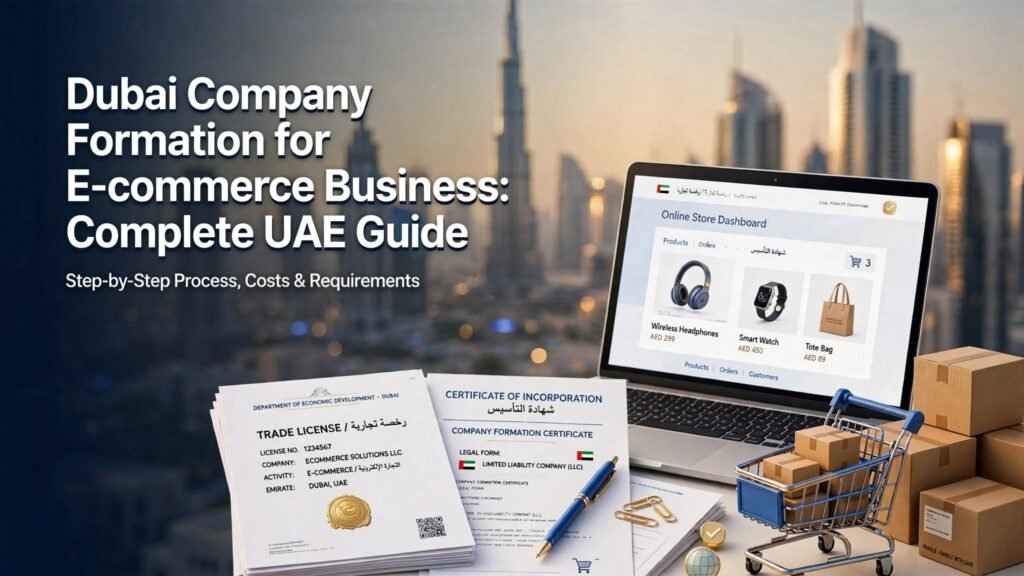 Company Formation
Dubai has become an attractive location for entrepreneurs who want to build and operate an online business. Its international customer base, business infrastructure, logistics…
Read more